

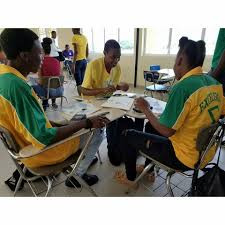
Juvenile numeracy refers to the development of basic mathematical understanding and skills in children and adolescents. It involves the ability to recognize, interpret, and apply numbers in everyday life situations. At this stage, numeracy extends beyond simple counting to include understanding place value, performing basic operations, comparing and ordering numbers, interpreting patterns, and solving practical problems.
The focus is on building strong foundational skills that encourage logical reasoning, problem-solving, and confidence with numbers. Juvenile numeracy also supports other areas of learning, such as science, technology, and financial literacy, while equipping young learners with critical life skills necessary for decision-making and future academic success.
- Teacher: Evelyn Miller-Bryan